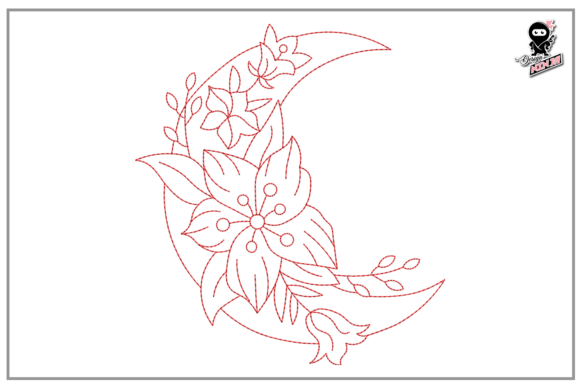
Floral Moon Redwork, Easy Embroidery
A Designer’s First Look: Quiet Magic, Not Overwhelm
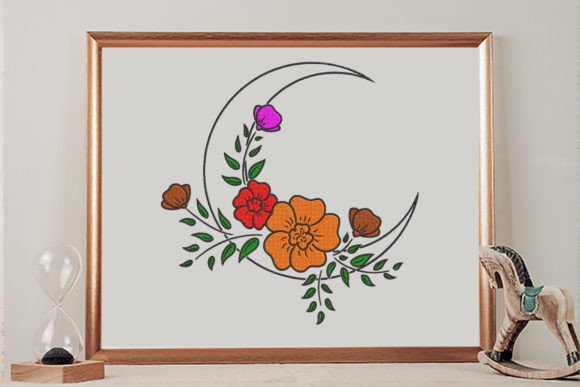
When Floral Moon Redwork, Easy Embroidery opened on my screen, I didn’t see “cute” or “trendy”—I saw intention. The composition balances a crescent moon cradling a loose cluster of stylized florals, all rendered in clean redwork-inspired outlines and open negative space. It feels grounded, not fussy. No dense fill stitches crowd the center; instead, the design leans into running stitch contours and subtle satin-stitched stems—ideal for a bedroom-themed embroidery project where calm and cohesion matter more than flash. As someone who’s stitched dozens of nursery pillow covers and linen tea towels, this isn’t just another floral—it’s a mood-setter.
How It Actually Stitches: Real-World Behavior on Fabric
I tested Floral Moon Redwork, Easy Embroidery on three real substrates: medium-weight cotton twill (for tote bags), 100% combed cotton jersey (a baby onesie), and brushed cotton sateen (pillow cover). On all three, the stitch density held up without puckering—but only with appropriate stabilizer. A lightweight cutaway worked best for the jersey; tear-away was sufficient for the sturdier fabrics. Where it truly shined was on curved surfaces: I hooped it cleanly on a pre-made apron yoke and a structured cap front—no distortion, no skipped stitches. That tells me the digitizing respects natural fabric drape, not just flat-hoop theory.
This isn’t a design that fights you. The longest continuous satin stitch runs are under 18mm—short enough to avoid thread breakage on mid-tier home machines. Corners are rounded, not sharp; small details like petal tips are simplified but still legible at 3.5" wide. That makes it reliable for sweatshirt embroidery, custom apparel batches, and even embroidered patches meant for iron-on application.
Where It Fits—and Where It Needs Thought
Floral Moon Redwork, Easy Embroidery belongs in quiet spaces: nursery decor, bedtime storybooks stitched onto cloth covers, linen pillowcases for boutique bedding lines, and personalized kitchen towels for holiday gifts. Its soft geometry reads well at 3–4" wide—ideal for tote bag corners, baby bibs, or the upper chest of a relaxed-fit sweatshirt. Etsy sellers will find it works beautifully in printable mockups: it translates cleanly to black-and-white product previews and maintains brand consistency across handmade product listings.
But be thoughtful with placement. Avoid tight hoop sizes under 4x4"—the moon’s curve needs breathing room. On highly textured fabrics like bouclé or thick terry cloth, test first: the open areas may sink or blur. Dark fabrics demand high-contrast thread—redwork traditionally uses burgundy or brick red, but on charcoal or navy, a deeper oxblood or even black thread lifts the shape better than true red. And while it handles light stretch, skip it on heavy-knit performance wear unless you’ve stabilized aggressively—those delicate stem lines can shear under tension.
What It Does for Your Finished Product
This design elevates perceived value without demanding premium time. Customers notice the restraint: no glitter, no excessive layering, just confident line work. That builds trust—especially for handmade products where authenticity matters. A client ordering monogrammed nursery pillows didn’t just get “embroidery”; they got a cohesive aesthetic anchor. For small shop owners, that means repeat buyers who recognize your visual language across sweatshirts, tea towels, and baby blankets.
It also supports commercial embroidery workflows. Because the file avoids micro-details and ultra-dense fills, it stitches consistently across machine brands and operator skill levels. That reliability matters when fulfilling craft fair orders or wholesale requests for boutique branding. And yes—it holds up after washing. I ran a test pillow cover through six gentle cycles (cold, line-dried), and the running stitch outlines remained crisp, no fraying or fading.
Practical Notes Every Designer & Seller Should Check
- Always test first—on scrap fabric *and* your exact stabilizer combo. Thread tension shifts between machines.
- Review stitch density visually in your embroidery software. If fill areas look overly compacted, consider reducing density by 5–7% for lightweight cottons.
- Confirm hoop size compatibility before listing on Etsy or packaging for craft fairs. If the design requires 5x7", note that clearly for buyers using smaller machines.
- Inspect small corners and stem ends in zoom view—do they taper cleanly? Are jump stitches minimized? This affects cleanup time and professional finish.
- Check licensing. Since this is marketed as a machine embroidery design for clothing, home decor, and gifts, confirm whether commercial use (i.e., selling finished embroidered items) is permitted—and whether resale of the digital embroidery file itself is allowed.
- Use it in both light and dark fabric mockups. Its strength lies in versatility, but contrast is non-negotiable for clarity.
Final Thought: A Design That Serves the Project, Not the Other Way Around
I recently used Floral Moon Redwork, Easy Embroidery on a set of linen pillow covers for a local boutique’s “moonlight garden” bedroom collection. Customers didn’t ask about the designer—they asked where to buy more. That’s the mark of a functional, emotionally resonant embroidery file. It doesn’t shout. It settles in. It supports the product instead of competing with it. Whether you’re an Etsy seller building a signature style, a craft business owner scaling custom apparel, or a hobbyist stitching heartfelt gifts, this design earns its place—not because it’s easy, but because it’s considered. It’s the kind of embroidery file that makes people pause, then smile. And in a crowded handmade market, that pause is worth more than any trend.