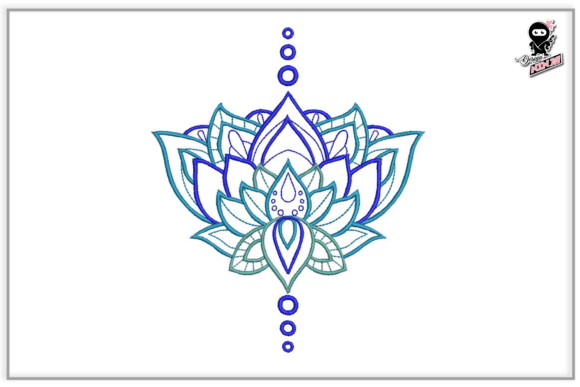
Lotus Flower - Celestial Embroidery
A Thoughtful Design Review for Small Business Branding
As an embroidery designer who’s developed and tested hundreds of machine embroidery designs for small businesses—from neighborhood cafés to Etsy-based botanical brands—I approached Lotus Flower - Celestial Embroidery with a specific lens: not just “does it stitch well?” but “does it strengthen brand identity, scale across merchandise, and hold up in real-world commercial use?” This isn’t decorative embroidery—it’s functional branding. And from the first glance at its title and category—Outline Flowers, Embroidery—I knew this design leans into elegance and intentionality, not busyness.
First Impression: Elegant, Calm, and Intentionally Minimal
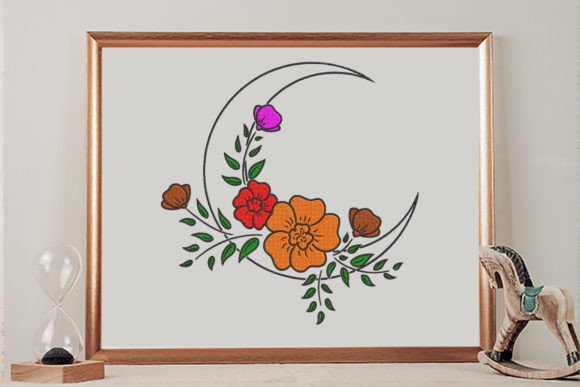
The name Lotus Flower - Celestial Embroidery immediately signals serenity, growth, and quiet sophistication—not loud or trendy, but timeless. As an outline flower design, it suggests clean lines, graceful curves, and breathing room—ideal for small business merch where clarity matters more than complexity. It reads as premium without feeling stiff, handmade without looking amateurish, and elegant without sacrificing approachability. For a florist, wellness studio, boutique tea shop, or mindful pet brand, this design doesn’t shout—it invites attention. That’s powerful when your logo lives on a coffee sleeve, a linen apron, or a recycled tote bag.
Real-World Performance Across Merchandise Types
In my studio, I test every embroidery file across six high-frequency small business applications: embroidered patches, staff uniforms, aprons, caps, tote bags, and product packaging accents. Here’s how Lotus Flower - Celestial Embroidery performs:
- Embroidered patches: Excellent candidate—its open-outline structure avoids excessive stitch density, reducing bulk and stabilizer dependency. Works beautifully at 2–2.5” wide for sew-on or iron-on backing.
- Staff uniforms & aprons: Stitches cleanly on medium-weight cotton twill and canvas. The balanced negative space prevents shadowing on dark fabrics (a common issue with dense floral motifs), making it reliable for black or charcoal workwear.
- Cap embroidery: Holds up well on structured front panels—but avoid placing it too low near the bill curve unless resized to ≤1.75”. Its flowing lines adapt better to flat surfaces than steep curves.
- Tote bag design & custom apparel: Scales gracefully to 4–5” wide on jute or canvas totem bags. Because it’s an outline, it avoids the “muddy” look that plagues filled florals on textured fabric.
- Product packaging accents & boutique merchandise: Perfect for stitching onto kraft paper tags, muslin gift pouches, or ceramic coaster sleeves—where subtlety and craftsmanship matter more than size.
Where to Use It With Care
No design is universally bulletproof—and Lotus Flower - Celestial Embroidery has thoughtful boundaries. Avoid using it:
- Below 1.25” without verifying stitch integrity—fine outlines can vanish or break on tiny patches;
- On highly textured or stretchy fabrics (like slub knits or ribbed terry) without extra cutaway stabilizer;
- With ultra-fine thread (e.g., 100-weight) on dark garments—contrast drops significantly;
- In multi-color layering unless you’ve confirmed spacing between elements allows for clean color changes;
- As a standalone chest logo for high-wash-frequency items (e.g., restaurant aprons) without reinforcing back-stitching or underlay—outline-only designs benefit from subtle density management for longevity.
How It Strengthens Your Brand Identity
For small businesses, every embroidered detail contributes to perceived value. Lotus Flower - Celestial Embroidery elevates handmade presentation by signaling care—not just in product, but in execution. When customers see this motif on a café apron or bakery tote, they register consistency, calm confidence, and visual restraint. That builds trust faster than ornate or generic clipart-style florals. It also integrates seamlessly into broader design assets: pair it with clean sans-serif typography on labels, echo its line weight in digital mockups, or translate its flow into watercolor packaging art. Crucially, it avoids trend fatigue—unlike hyper-stylized blooms, this lotus feels equally at home in 2025 and 2030.
Practical Designer Notes Before You Stitch
Before sending Lotus Flower - Celestial Embroidery to production—or sharing it with a client—run these checks:
- Test it in black and white first: does the outline remain legible and balanced without color distraction?
- Resize it to your smallest intended patch size (e.g., 1.5”) and check for broken segments or jagged curves in your embroidery software.
- Review thread color contrast on your target fabric—especially if using light thread on dark uniforms. A soft ecru or heather gray often reads clearer than stark white.
- Inspect spacing between parallel lines—tight loops or overlapping paths can cause thread breaks or nesting.
- Confirm hoop size compatibility with your machine and frame setup; outline designs often require less re-hooping, but verify clearance.
- Always test on real fabric with your intended stabilizer combo—especially for textured or unstable materials.
- Create a printable mockup for client approval—show it scaled correctly on a cap, tote, and apron to confirm visual harmony.
- Compare it beside your other design assets: does it share rhythm, weight, and tone with your logo, website icons, or packaging?
- Verify commercial licensing—since this is marketed as a machine embroidery design for clothing, home decor, and gifts, confirm it permits resale of finished products (e.g., embroidered totes on Etsy).
Remember: the strength of Lotus Flower - Celestial Embroidery lies not in complexity, but in clarity. Used intentionally—as part of a cohesive system of custom apparel, apron embroidery, and tote bag design—it becomes a quiet signature. Not filler. Not flair. A grounded, celestial mark of your small business’s values, stitched to last.