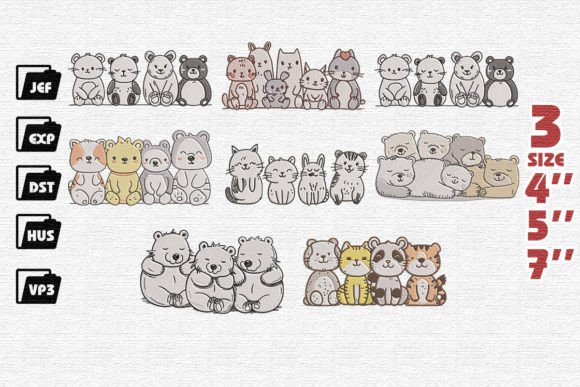
Set of 8 Cute Animals Family Embroidery
A Designer’s First Look: Joyful, Cohesive, and Instantly Relatable
Opening the Set of 8 Cute Animals Family Embroidery, I immediately felt the warmth—not just in the theme, but in how intentionally balanced the collection feels. These aren’t random critters tossed into a bundle. Each animal has gentle proportions, soft curves, and expressive simplicity: a sleeping fox curled in a circle, a wide-eyed owl perched on a tiny branch, a bear holding a heart-shaped balloon. There’s no visual noise—no over-rendered fur, no fussy outlines—and that’s exactly what makes this set so versatile for real-world use. As a designer who regularly sources embroidery files for client projects and my own small shop line, I appreciate when a machine embroidery design communicates personality without demanding perfection from the stitcher.
Where It Shines: Real Projects That Feel Thoughtful, Not Trendy
Last week, I used three designs from the Set of 8 Cute Animals Family Embroidery to create personalized baby shower gifts: embroidered muslin swaddle blankets, a linen tea towel for the new parents’ kitchen, and a cotton canvas tote bag for diaper carry-ons. The results landed beautifully—not because they were flashy, but because they felt *considered*. On the swaddle, the bunny design (about 3.2" wide) stitched cleanly with minimal puckering, even on lightweight fabric. On the tea towel, the raccoon sat perfectly centered above the hemline—its rounded shape softened the towel’s crisp edge without competing with the weave. And on the tote? The hedgehog design added charm without overwhelming the sturdy canvas. Customers responded not just to “cute,” but to the sense of care embedded in the choice—like the gift was made *for* someone, not just *with* a machine.
Why Small Business Owners Will Appreciate This Set
- Consistent visual language: All eight animals share the same line weight, stitch rhythm, and spacing logic—so mixing them across products (e.g., matching pillow covers and aprons for a boutique nursery line) feels intentional, not pieced together.
- Natural scalability: These designs hold up well at 2.5"–4.5", making them ideal for both delicate baby embroidery and bold sweatshirt embroidery—no need to hunt for alternate versions.
- Emotional resonance over novelty: Unlike hyper-trendy motifs that date quickly, these animals tap into timeless warmth—ideal for Etsy sellers building long-term brand recognition and repeat buyers.
Real-World Stitching Notes: What You’ll Actually Encounter
This isn’t a “plug-and-stitch” file that hides complexity. As an embroidery designer, I always test before committing to client work—and here’s what stood out:
- Stitch density is moderate: No heavy fill-stitch blocks or dense satin-stitch eyes that could stiffen thin fabrics. That means better drape on t-shirts and baby onesies, and less risk of thread breakage on older machines.
- No tiny lettering or micro-details: A relief. There’s no hidden text, no intricate paw prints smaller than 1.5mm—so you won’t lose clarity on textured fabrics like terry cloth or looped towels.
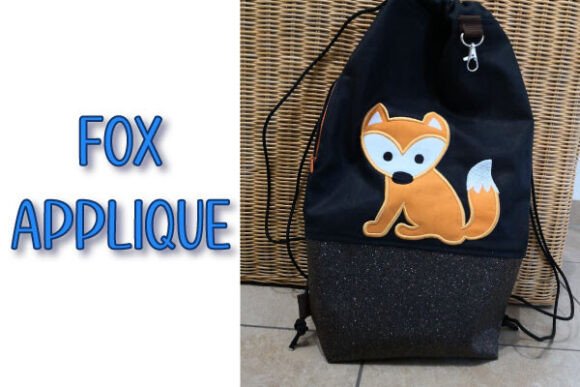
- Applique-friendly structure: Though sold as a standard embroidery file, several designs (especially the fox and owl) translate smoothly into applique layouts—great for craft fairs where layered texture adds perceived value.
Use With Care: Where Context Matters Most
The Set of 8 Cute Animals Family Embroidery excels in thoughtful applications—but it’s not universally forgiving. Here’s where I’d pause and plan:
- On stretchy knits: Use light cutaway stabilizer and baste first. The clean curves look lovely on crewnecks, but without proper support, the outer satin stitches can shift on high-recovery fabric.
- For curved surfaces (caps, beanies): Test hoop placement carefully—the rounded animal silhouettes can distort if hooped too tightly on rigid caps. Consider simplifying to one animal per cap front rather than clustering.
- Dark or heavily textured backgrounds: While the designs stitch clearly, low-contrast thread colors (e.g., light gray on charcoal) fade visually. Always check your thread colors against the final fabric in natural light—not just on screen.
- Commercial embroidery for resale: Confirm licensing terms before using in wholesale apparel or digital product previews. Some sellers bundle personal-use-only files; others grant full commercial rights. Don’t assume.
Design Judgment: Beyond Aesthetics, Into Trust & Value
What elevates the Set of 8 Cute Animals Family Embroidery beyond decoration is how it supports professionalism. When customers see these animals on a handmade product—say, a linen pillow cover sold at a local boutique—they don’t just register “cute.” They register *craftsmanship*: clean entry/exit points, balanced underlay, and shapes that respect fabric behavior. That builds quiet trust—the kind that turns one-time buyers into repeat clients.
For Etsy sellers, it also strengthens listing credibility. Pairing the embroidery file with a simple printable mockup (a neutral background + one animal in soft shadow) reads as confident, not generic. And for holiday embroidery or personalized gifts? These animals read as heartfelt—not mass-produced—because their simplicity invites connection, not distraction.
Practical Next Steps Before You Stitch
Before cutting fabric or loading your hoop:
- Test the machine embroidery design on scrap fabric matching your project’s weight and stretch.
- Review stitch density in your embroidery software—look for unusually tight fills or long jump stitches.
- Check hoop size requirements—some animals may need a 5x7" minimum for optimal tension control.
- Compare how the design reads in black-and-white mockups—this reveals contrast issues invisible on-screen.
- Verify stabilizer type: medium-weight tear-away works for most cottons and linens; light cutaway is safer for knits or baby embroidery.
- Confirm whether the digital embroidery file includes color sequence notes—helpful for consistent thread changes across batches.