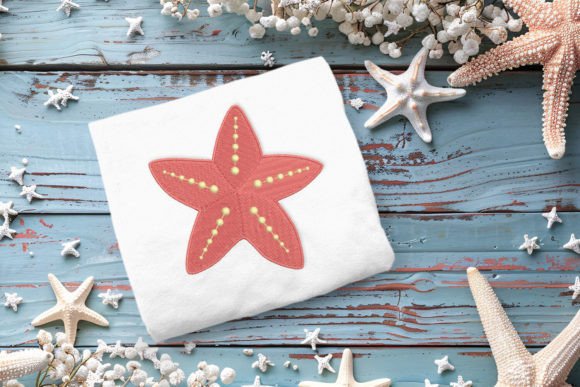
Starfish Mini Embroidery
A Beachy Little Anchor for Real Projects
When I opened the Starfish Mini Embroidery file and previewed it in my digitizing software, my first thought wasn’t “cute” — it was “usable.” That’s rare. So many beach-themed machine embroidery designs lean into overworked detail or cartoonish exaggeration, but this one lands with quiet confidence: a clean, balanced silhouette that reads instantly at 1.5 inches and holds its charm up to 3 inches. It doesn’t shout “vacation!” — it whispers “salt air, soft sand, thoughtful making.” That subtlety is exactly why I reached for it when prepping a batch of linen tea towels for a local boutique’s summer launch.
How It Stitches — Not Just How It Looks
I ran the 2-inch version on medium-weight cotton twill (for aprons), lightweight jersey (for baby onesies), and even a slightly napped terry cloth towel. On stable fabrics with tear-away stabilizer, the satin stitch edges stayed crisp and smooth — no puckering, no skipped stitches. The fill stitch density felt intentional: dense enough to read clearly on light fabric, but open enough to avoid stiffness on delicate items like newborn caps or pillow covers. Where it shined most was on curved surfaces: I hooped a structured cotton cap, used cutaway + topping, and the starfish held its shape without distortion — no stretching or flattening at the points.
That said, I’d skip it on ultra-thin silk or heavily stretchy performance knits unless you’re willing to test stabilizer combinations thoroughly. The design has no tiny interior details — no eyes, no texture lines — which is smart. It means fewer thread breaks, less chance of fraying on wash, and cleaner results on textured fabrics like canvas tote bags or burlap kitchen towels. For Etsy sellers bundling digital embroidery files, that reliability translates directly to fewer customer complaints and more five-star reviews about “stitching like a pro.”
Where It Belongs — And Where It Doesn’t
This isn’t a standalone hero design for a full-sleeve sweatshirt. It’s an accent — a small, meaningful punctuation mark. I used the 1.5-inch size as a subtle left-chest detail on organic cotton tees for a coastal wedding favor line. Paired with a simple monogram, it added personality without overwhelming. On baby embroidery projects — think swaddle blankets or bibs — the 2-inch version worked beautifully centered above a name. Its rounded, friendly shape feels inherently gentle and safe.
It’s also ideal for embroidered patch production. I stitched the 2.5-inch version onto iron-on backing, then heat-pressed it onto denim totes. The clean outline and consistent stitch width made trimming and sealing edges fast and precise. For holiday embroidery? Think minimalist Christmas stockings with a single starfish near the cuff — not festive in a red-and-green way, but quietly joyful and timeless.
What I wouldn’t do: place it near seam allowances on thin baby onesies without testing seam puckering, or use the 3-inch size on a curved baseball cap front without adjusting tension and stabilizer. Also, avoid layering it over heavy topstitching or dense quilting — the design needs breathing room to read clearly.
Design Judgment You Can Trust
As a designer who evaluates hundreds of embroidery files a year, I look beyond prettiness. Does it scale well? Yes — all four sizes maintain proportion and legibility. Does it respect fabric behavior? Absolutely — no excessive underlay, no fragile jump stitches, no over-digitized corners. Is it commercially viable? Without question. The inclusion of eight formats (DST, EXP, HUS, JEF, PEC, PES, VP3, XXX) covers nearly every home and small-shop machine on the market. That flexibility alone saves hours of conversion work for craft business owners and digital product sellers.
For handmade product creators, the Starfish Mini Embroidery elevates perceived value without adding complexity. A plain linen napkin becomes a boutique-worthy gift when finished with this stitch. A generic cotton tote gains instant coastal charm — recognizable, but not cliché. Customers notice that difference. They feel the care in the clean finish, the thoughtful sizing, the absence of messy thread nests or fuzzy edges. That builds trust — especially for personalized gifts where buyers are investing emotionally, not just financially.
Practical Designer Notes Before You Stitch
- Always test first — run the smallest size on scrap fabric matching your final project’s weight and stretch.
- Check thread color contrast — this design relies on silhouette, so high-contrast pairings (navy thread on cream, white on charcoal) maximize impact.
- Review stitch density in your software — if you’re stitching on dark fabric, consider reducing fill density slightly to prevent shadowing or stiffness.
- Confirm hoop size — the 3-inch version fits comfortably in a 4x4 hoop, but verify your machine’s max embroidery area before committing.
- Inspect small details visually — zoom in on the tips of the arms; they should taper cleanly, not end in jagged clusters.
- Test black-and-white mockups — how does it read in grayscale? This tells you whether it’ll translate well to printed product photos or social media thumbnails.
- Use proper stabilizer — tear-away for stable wovens, cutaway for knits, and always add a light topping for napped or fuzzy fabrics.
- Verify licensing — since this is a digital embroidery file intended for commercial embroidery and finished product sales, confirm the terms allow for your intended use (e.g., selling embroidered tote bags on Etsy).
Final Thought: Less Is Seamlessly More
The Starfish Mini Embroidery doesn’t try to be everything. It’s not a complex applique design with layered fabrics or intricate satin-stitched gradients. It’s a focused, well-built embroidery file that does one thing exceptionally well: deliver beachy calm with precision and grace. Whether you’re stitching custom apparel for a seaside café, building a cohesive line of nursery decor, or creating digital design assets for fellow makers, this is the kind of embroidery project that makes your workflow smoother and your finished product feel intentionally crafted — not assembled. In a world of noisy, over-digitized designs, that quiet reliability is worth its weight in rayon thread.