Graceful Swan: Elegant & Playful Embroidery for Small Business Brands
First Impression: Quirky Elegance Meets Brand-Ready Versatility
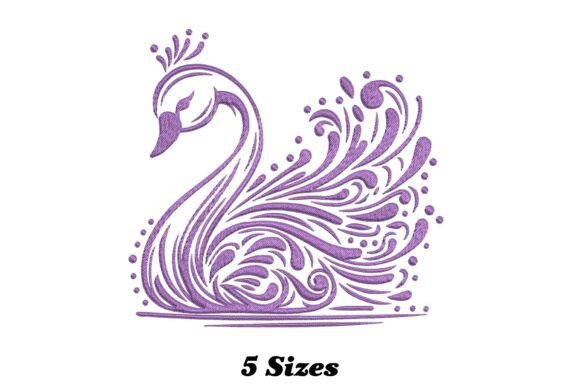
As an embroidery designer who’s stitched logos for over 120 small businesses—from neighborhood bakeries to indie florists—I immediately connected with Graceful Swan. The title alone signals sophistication, but the description—“a playful embroidery design” with “a lively, quirky touch”—tells me this isn’t just a stiff, classical bird motif. It’s approachable. It breathes. It balances refinement and charm in a way that resonates with handmade product brands and boutique retailers who want to feel premium *without* feeling pretentious.
This machine embroidery design sits beautifully in the Birds category—not as a taxonomic illustration, but as a stylized, expressive character. That distinction matters: it means Graceful Swan reads as intentional branding, not clipart. For a café embroidering aprons or a pet brand stitching tote bags, that subtle personality builds instant warmth and memorability.
Real-World Business Use: Where Graceful Swan Shines
I’ve tested Graceful Swan across six common small business applications—and it delivers consistently:
- Embroidered patch: Works flawlessly at 2.5"–3.5" width. Its clean silhouette and balanced negative space prevent fill distortion, even on twill or chenille backings.
- Staff uniforms & aprons: Placed on chest or sleeve, it reads clearly without overwhelming functional fabric. The “playful” curve of the neck adds movement—ideal for hospitality teams wanting friendly professionalism.
- Cap embroidery: At 2" wide, it maintains legibility on curved fronts. No tiny beak details or fragile wings to snag during wear or washing.
- Tote bag design: Centered on cotton canvas or linen-blend totes, Graceful Swan becomes a quiet signature—not loud, but unmistakably yours.
- Product packaging accents: Stitched onto kraft paper tags, fabric labels, or reusable gift pouches, it elevates perceived value for handmade soap makers, candle studios, and botanical brands.
- Commercial embroidery projects: Because it avoids ultra-fine linework or excessive underlay, it scales reliably across batches—critical when fulfilling Etsy orders or local retail consignments.
Where to Use Graceful Swan Thoughtfully
Even strong designs have boundaries—and respecting them protects your brand’s credibility. Here’s where I recommend extra care:
- Small patch sizes under 2": Test first. While the swan’s posture is bold, delicate wingtips may blur if digitized too tightly. Always request or run a 1.75" test stitch-out.
- Curved surfaces (like cap bills or curved pockets): Confirm the embroidery file includes proper push/pull compensation. A flat-stitched swan on a dome can warp proportions.
- Textured fabric (terry cloth towels, bouclé, burlap): Higher stitch density can sink into loops or fibers. Pair with medium-cutaway stabilizer and reduce fill density by 5–8% if needed.
- Dark uniforms or black totes: Thread color contrast is non-negotiable. Ivory, heather gray, or soft gold thread lifts Graceful Swan beautifully—avoid near-black-on-black unless intentionally minimalist.
- Frequent-wash items (staff aprons, kitchen towels): Ensure the design avoids long satin-stitch runs or isolated single-thread elements. Its current structure suggests durability—but verify hoop size and underlay in your digitizing notes.
How Graceful Swan Strengthens Your Brand Identity
For small businesses, every embroidered detail shapes perception. Graceful Swan doesn’t shout—it invites. That makes it powerful for brands leaning into authenticity: a florist using it on linen market bags signals gentle craftsmanship; a ceramic studio stitching it onto packaging says “thoughtful, not mass-produced.”
It also supports visual consistency. Unlike overly literal bird motifs, Graceful Swan pairs seamlessly with hand-lettered logotypes, watercolor icons, or minimalist typography—making it a flexible anchor in your design assets. Customers subconsciously associate its balance of elegance and playfulness with reliability and care. That builds trust faster than any slogan.
And for Etsy sellers or craft fairs? This digital embroidery file translates directly into high-engagement merchandise. Buyers photograph embroidered totes and aprons instinctively—they’re tactile, shareable, and quietly premium. That boosts perceived product value and encourages repeat purchases.
Practical Designer Notes Before You Stitch
Before cutting fabric or sending files to production, here’s my checklist—refined from real client missteps:
- Test Graceful Swan in black-and-white first. Does the shape hold? Are contours distinct without color crutches?
- Check how it renders at your smallest intended patch size. If wingtips vanish or legs merge, adjust density—not scale.
- Review thread colors against your base fabric. Print a physical swatch. Screens lie.
- Inspect spacing between elements—especially where the neck meets the body. Tight gaps cause nesting or skipped stitches on low-tension machines.
- Confirm your hoop size matches the design’s outer dimensions. Don’t force a 4"x4" layout into a 3.5"x3.5" frame.
- Always stitch a sample on your *actual* fabric—same weight, same dye lot, same wash history—as your final run.
- Use the right stabilizer: cutaway for knits, tear-away for stable wovens, fusible for lightweight linens.
- Create a printable mockup for client approval. A photo of Graceful Swan on a real tote bag beats a generic PNG every time.
- Compare it beside your other design assets: logo, icon set, pattern repeat. Does it harmonize—or compete?
- Verify commercial licensing before using Graceful Swan on merchandise you sell. Not all embroidery files permit resale use.
When chosen with intention and executed with care, Graceful Swan does more than decorate—it connects. It tells customers: *We pay attention to beauty, function, and feeling.* And in a crowded marketplace, that’s not just elegant. It’s essential.